

Why Root Canal Treatment is the Key to Saving Your Natural Tooth
Root Canal Treatment is a specialized dental procedure designed to remove infected or inflamed pulp tissue from inside the tooth’s nerve and root canal system. Once thoroughly cleaned and disinfected, the space is sealed and restored to its optimal strength and appearance. This vital treatment allows you to retain your natural tooth, avoiding the need for extraction and implants.
Common Causes Requiring Root Canal Treatment
Infection within the dental pulp usually stems from untreated dental issues or trauma, including:
- Deep Tooth Decay that reaches the internal nerve chamber.
- Cracked, Fractured, or Severely Worn Teeth which allow bacteria to penetrate deep inside.
- Dental Trauma from Accidents that compromises the tooth’s internal blood and nerve supply.
Warning Signs to Watch For: Spontaneous throbbing tooth pain, intense sensitivity to hot or cold food and drinks, pain while chewing, noticeable tooth discoloration, swollen gums, or visible pus pockets around the affected area.
The Step-by-Step Root Canal Procedure
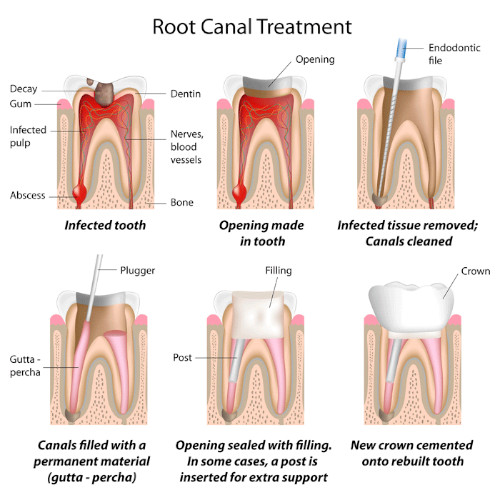
Typically completed over 2 to 3 appointments depending on the complexity and severity of the infection, the standard procedure includes:
- Local Anesthesia & Isolation: The dentist applies local anesthesia, which keeps most patients comfortable, and places a dental dam to protect the tooth from saliva.
- Access & Cleaning: A small opening is made to remove infected pulp tissue. The root canals are then thoroughly flushed with specialized antibacterial solutions.
- Disinfection & Sealing: Medication is placed inside the canal to eliminate remaining bacteria. Once the infection clears, the canal is filled and securely sealed.
- Final Restoration: The outer tooth structure is fully restored using high-quality materials.
*Note: Mild discomfort or soreness for 1–3 days following each visit is completely normal and can be managed with standard pain relievers. To prevent fractures, please avoid biting or chewing hard foods on the treated tooth until the final restoration is fully complete.
Essential Aftercare Tips Post-Treatment
For the best long-term success, please follow these professional recommendations closely:
- Protect the Treated Tooth: Avoid using the treated tooth to chew hard or crunchy foods before your final dental appointment.
- Monitor Temporary Fillings: If your temporary filling dislodges or cracks open, contact your dentist immediately.
- Attend All Scheduled Visits: Complete your entire treatment plan to avoid re-infection and prevent future tooth loss.
Why Do I Need a Dental Post and Crown After a Root Canal?
After undergoing a root canal, the tooth loses its blood supply, making it naturally brittle and prone to fracturing under normal chewing pressure. A dental post and dental crown act as a protective shield to reinforce the remaining tooth structure. You can select the ideal crown type for your aesthetic and functional needs, including All-Ceramic, full metal, or Porcelain-Fused-to-Metal (PFM).
Frequently Asked Questions (FAQ)
Q: Can I skip root canal treatment?
Q: How long does a root canal-treated tooth last?
Q: Will the tooth hurt again after the procedure?
Your first visit is just a conversation — no commitment.
LINE @casadent · Tel 063-956-6632 · See our price list
CASA Dental Clinic, Saphan Khwai (BTS Saphan Khwai) · Open daily 10:30–20:00

