How to Brush Teeth with Braces

How to Brush Teeth with Braces


Metal braces remain one of the most effective and time-tested orthodontic treatments for correcting misaligned, crowded, or spaced teeth. However, having brackets, wires, and elastic bands in your mouth creates numerous tight spaces where food debris easily gets trapped. Without meticulous care, plaque build-up can quickly lead to tooth decay, swollen gums, calculus, and bad breath.
Mastering how to brush teeth with braces properly is absolutely vital. It ensures that when your orthodontic journey ends, you are left with a smile that is not only perfectly straight but also beautifully healthy and cavity-free.
Why Orthodontic Oral Hygiene Matters So Much
Neglecting oral hygiene while wearing braces can lead to unexpected oral complications and hinder your orthodontic progress:
- Food Trap Hazards: The structural gaps between brackets and archwires easily catch fibers and debris after every meal.
- Increased Cavity Risks: Trapped carbohydrates react with oral bacteria, generating harmful acids that erode tooth enamel.
- Gum Disease (Gingivitis): Plaque accumulation along the gumline causes gums to become red, tender, swollen, and prone to bleeding.
- Chronic Bad Breath: Decaying food particles remaining around dental hardware are the primary cause of halitosis.
- Disrupted Treatment Timeline: If severe tooth decay or gum disease occurs, your dentist may have to remove your braces to treat the infection, extending your treatment duration and raising costs.
Step-by-Step: How to Brush Teeth with Braces
1. Use an Orthodontic Toothbrush
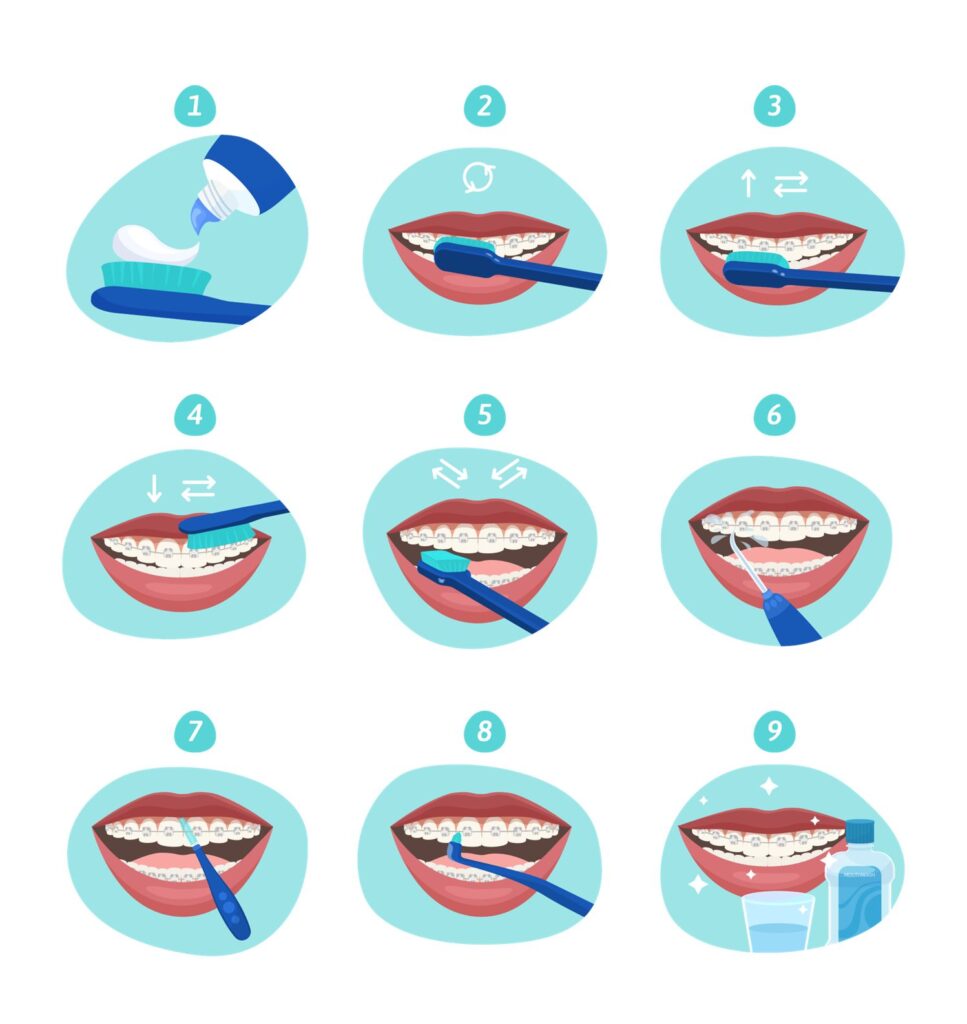
Opt for a specialized orthodontic toothbrush featuring soft bristles and a V-channel trim design. The shorter inner bristles clean the brackets efficiently, while the longer outer bristles reach the tooth surfaces and gumline.
2. Increase Brushing Frequency
Brush your teeth at least 2–3 times a day. It is highly recommended to brush after every major meal to clear away newly trapped food particles before they form plaque.
3. Master the Proper Brushing Technique
- Tilt your toothbrush at a 45-degree angle toward your gumline.
- Above the Brackets: Gently vibrate the bristles along the upper part of the bracket and brush downwards (for upper teeth).
- Below the Brackets: Tilt the brush upwards and sweep from under the bracket line up (for lower teeth).
- On the Brackets: Position the brush flat against the hardware and clean in gentle, circular motions.
- Ensure you brush the interior surfaces, chewing faces, and your tongue thoroughly.
4. Essential Orthodontic Cleaning Tools
- Interdental Brush: Designed to slide smoothly under the archwires to clean the tight vertical spaces between brackets.
- Orthodontic Floss (Superfloss): Features a stiffened end that lets you thread the floss underneath wires to clean between adjacent teeth.
- Fluoride Mouthwash: Helps rinse away remaining bacteria, remineralizes weak enamel, and protects against demineralization stains.
Pro-Tips for Maintaining Braces & Oral Health
- Carry a Portable Hygiene Kit: Keep a travel toothbrush and an interdental brush in your bag for on-the-go cleaning.
- Avoid Problematic Foods: Steer clear of hard, sticky, or overly crunchy foods (like ice, nuts, hard candy, and gum) that can break brackets or distort wires.
- Cut Back on Sugary Items: Limit carbonated drinks, juices, and sweets to minimize plaque accumulation.
- Stick to Scheduled Adjustments: Attend your routine orthodontic visits punctually so your dentist can assess your progress and perform professional cleanings.
💬 Frequently Asked Questions (FAQ)
Q: What should I do if I eat out and cannot brush my teeth immediately?
A: If you find yourself without a toothbrush, vigorously rinse your mouth with plain water several times to dislodge loose food debris, then brush thoroughly as soon as you get home.
Q: Can an interdental brush completely replace standard dental floss?
A: No, they serve different purposes. An interdental brush cleans around the metal hardware and wire paths, whereas floss removes plaque from the tight contact areas directly between your teeth. For ideal results, use both together.
📌 The Bottom Line
Maintaining oral hygiene with metal braces requires a bit of extra patience, but the long-term payoff is worthwhile. By executing a thorough cleaning routine, you prevent dynamic dental diseases, ensuring that your newly aligned teeth look stunningly pristine, radiant, and healthy the day your braces come off.
Need personalized tips or a routine checkup during your braces treatment? Book a free consultation with us at: CASA Dental Clinic
Related posts